Amazon Wants to Run Your eBay, Shopify and TikTok Store Too. Should You Let It?
Imagine your landlord offering to also manage the apartment you rent across town.
Free of charge. Out of the goodness of their heart.
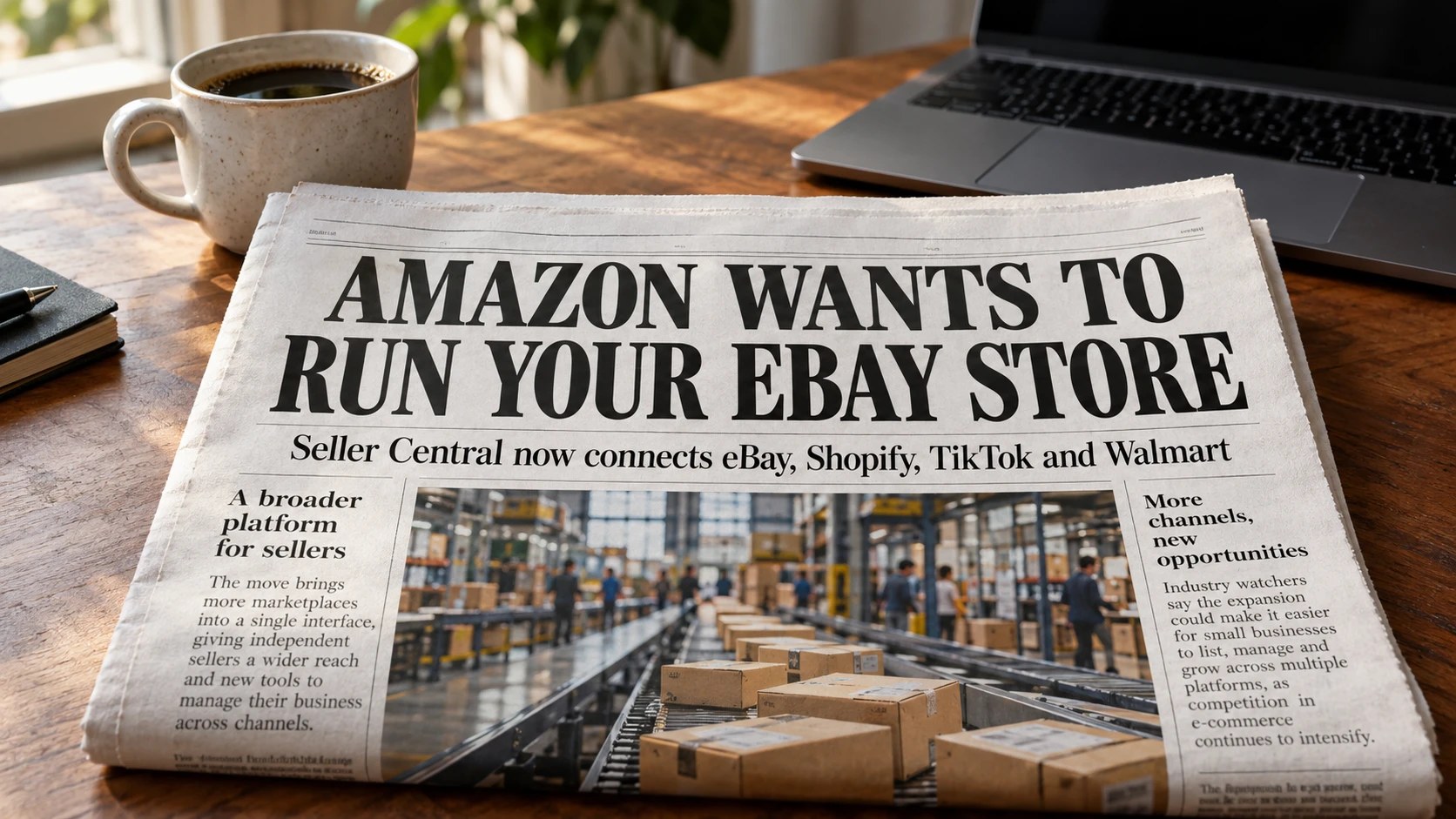
That’s roughly the vibe of Amazon’s latest announcement. At its Accelerate seller conference, the company unveiled Amazon Multichannel Selling Tools that let sellers connect their eBay, Shopify, TikTok Shop and Walmart accounts and manage everything from inside Amazon Seller Central.
It’s a genuinely useful idea. It’s also Amazon. So let’s talk about both sides.
What Amazon Announced
The short version:
- Connect outside stores to Seller Central, starting with eBay, Shopify, TikTok and Walmart
- Import and link listings from those channels
- See orders and sales across all of them in one dashboard
- Fulfill orders across channels from the same place
- No extra cost, rolling out gradually to US sellers over the coming months
Amazon says more channels are coming, and that the tools have strict access controls so a seller’s data isn’t shared with other sellers or used for Amazon’s own retail decisions.
Why This Is Actually Useful
If you sell on more than one marketplace, you know the pain.
One tab for eBay. One for Amazon. Maybe Etsy, maybe TikTok. Each with its own orders page, its own inventory count and its own way of telling you something sold.
Selling the same item twice because one platform didn’t update fast enough is a rite of passage. A painful, refund-filled rite of passage.
With Amazon Multichannel Selling Tools, a single dashboard that shows every order and keeps inventory in sync solves a real problem. Tools that do this already exist, but most of them cost money every month. Amazon is offering it for free.
Why Amazon Is Doing This
Here’s where my landlord analogy comes back.
Amazon doesn’t build free tools out of kindness. Free tools are usually about keeping you in the building.
My read on what Amazon gets out of it, and to be clear, this is opinion, not something Amazon has said:
- You spend more time in Seller Central, which makes Amazon the center of your business instead of one channel among many
- It makes Amazon’s fulfillment network more attractive for orders that didn’t even happen on Amazon
- It gives Amazon a clearer picture of how sellers do elsewhere. Amazon says it won’t use that data for its retail decisions, and some analysts have still pointed out how much insight a tool like this could offer
None of that makes it a bad deal. It just means you should go in with eyes open.
How It Compares to Shopify
Amazon isn’t the first to do this.
Shopify already has Marketplace Connect, which lets merchants manage Amazon, Walmart, eBay and Target Plus sales from inside Shopify. Third-party tools do similar things for a monthly fee.
So the real question isn’t “should I manage multiple channels from one place?” It’s “whose dashboard do I want at the center of my business?”
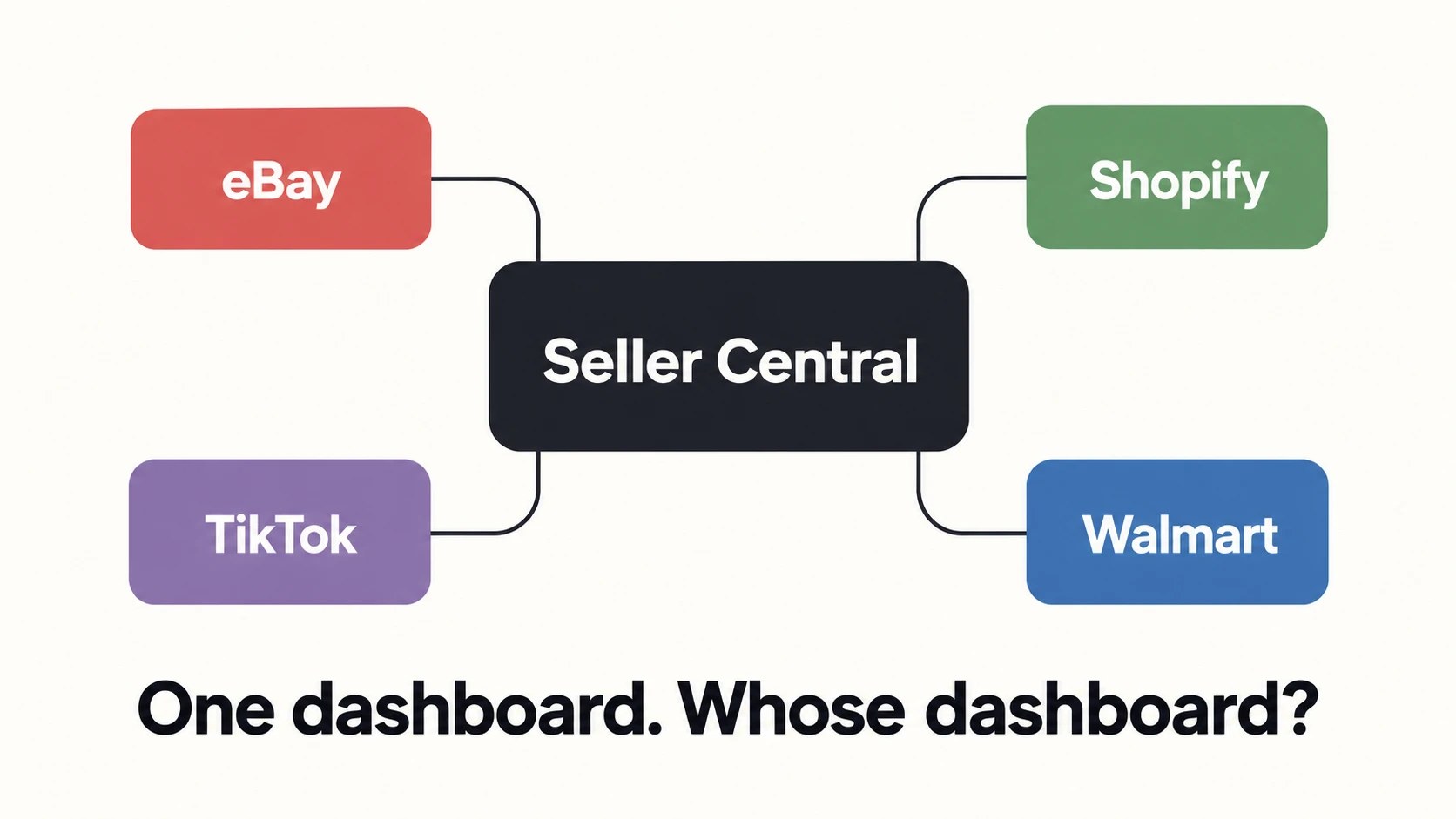
If your business is mostly Amazon, using Seller Central as home base makes sense. If you’re mostly eBay or Shopify, it might feel like moving into the landlord’s spare bedroom.
What I’d Do as a Small Reseller
I mostly sell on eBay (which has its own big change coming, with eBay balance becoming mandatory), so here’s how I’m thinking about it:
- If you only sell on one platform, ignore this for now. It solves a problem you don’t have yet.
- If you sell on Amazon plus one or two others, it’s worth trying when it reaches your account. Free inventory sync is a real time saver.
- If Amazon is a small part of your business, I’d be cautious about making Seller Central your command center.
- Either way, read the permissions before connecting other accounts. Know what you’re sharing.
- Don’t rely on any one tool completely. If something breaks during the holiday rush, you want to know how to manage each platform on its own.
The Bigger Picture
This is part of a bigger trend: marketplaces want to be your whole business, not just one sales channel.
Amazon wants Seller Central to be your hub. Shopify wants its admin to be your hub. Everyone wants to be the place you open first every morning.
For sellers, that competition is mostly good news. It means better free tools. You just have to remember that every free tool comes with a reason it’s free.
Final Thoughts
Amazon managing your eBay store sounds wild at first.
But if you’re juggling multiple marketplaces, a free dashboard that keeps everything in sync is genuinely helpful.
Just remember who’s offering it.
The landlord is being very nice.
Read the lease.
Dom
Sources: Amazon: Seller Central multichannel selling tools announcement, GeekWire coverage
Frequently Asked Questions
What are Amazon Multichannel Selling Tools?
They’re new Seller Central features that let US sellers connect eBay, Shopify, TikTok Shop and Walmart accounts, import listings, view orders across channels and fulfill them from one dashboard.
How much do Amazon’s Multichannel Selling Tools cost?
Amazon says the tools come at no extra cost and are rolling out gradually to US sellers.
Does Amazon use multichannel data for its own business?
Amazon says the tools have strict access controls and that seller data isn’t shared with other sellers or used to inform Amazon’s retail business decisions.
Is there an alternative to managing marketplaces in Amazon?
Yes. Shopify’s Marketplace Connect lets merchants manage Amazon, Walmart, eBay and Target Plus from inside Shopify, and several third-party tools offer multichannel management for a monthly fee.