I Flip Clearance Phones From Walmart. Here’s What Actually Sells (and What I Avoid)
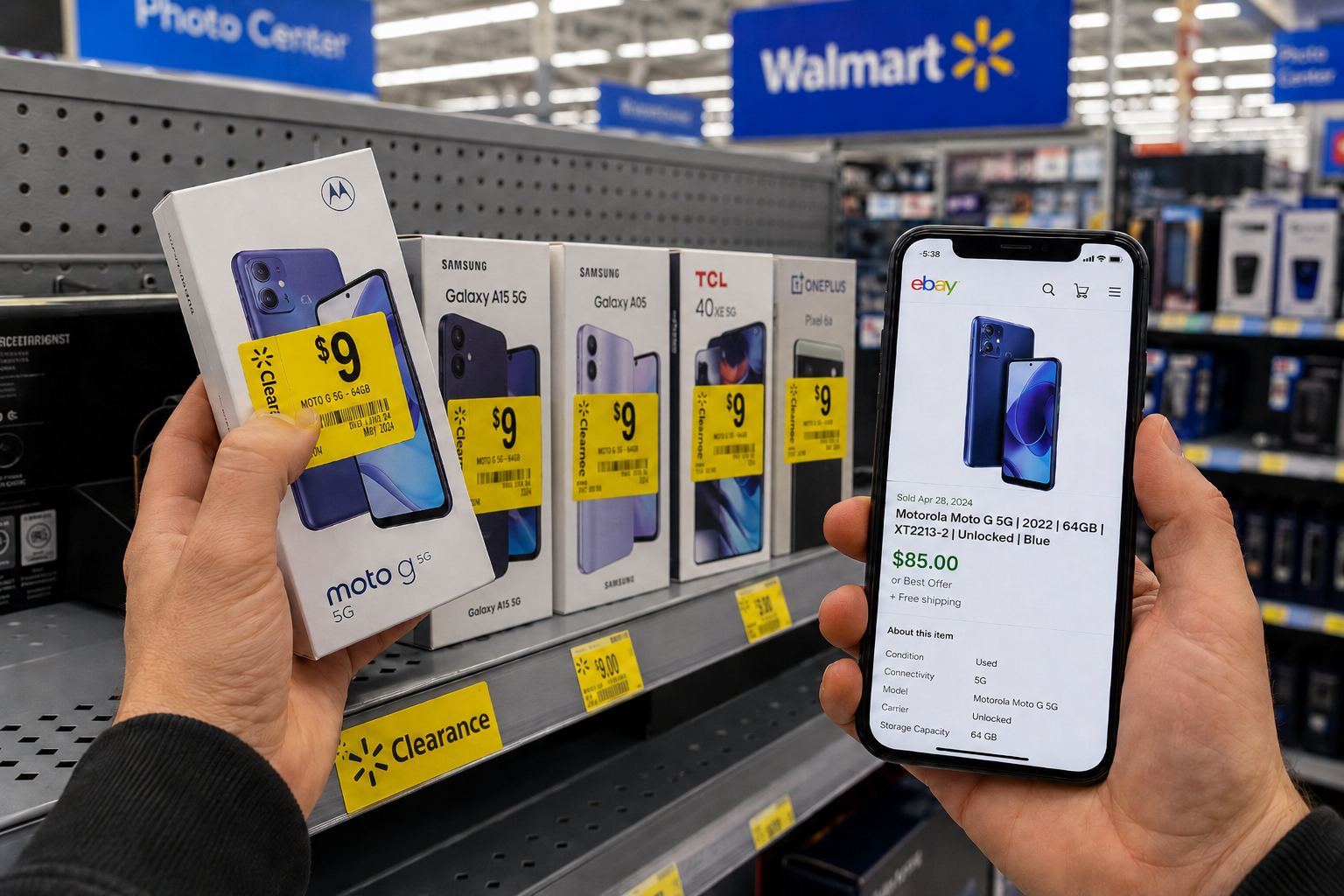
I’ve flipped a lot of phones. Not one big trophy sale I can brag about, just dozens and dozens of small, boring, reliable flips that quietly add up. Nearly all of my Walmart phone flips are clearance finds, some marked down anywhere from 50% to 75% off, bought for somewhere between $9 and $40 and resold on eBay for $35 to $110.
Now, $15 average profit per phone after fees and shipping isn’t going to buy anyone a lambo. But that was never the point. These are fast flips that build feedback and free up cash to reinvest, and when you run enough of them, fifteen bucks at a time turns into real money quicker than you’d think. It’s less “get rich” and more “get reps.”
Here’s everything I’ve figured out doing this, including the time someone straight up robbed me and I didn’t even realize it until I was standing in an Apple Store.
What actually sells
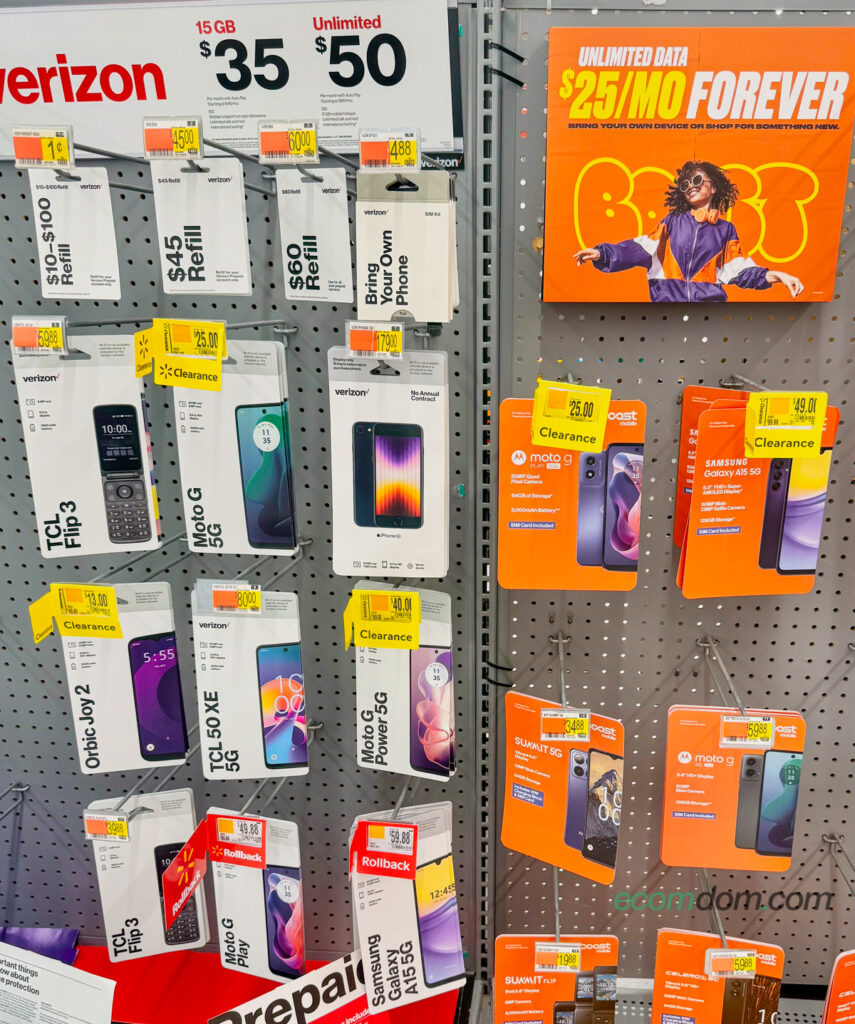
If you want the safest bets, it’s iPhones and Samsungs. They’re the names people search for and trust, so they move fastest and you rarely have to fight to sell one. But they’re not the only phones worth grabbing, and honestly most of my flips aren’t iPhones at all.
The problem with iPhones is that Walmart knows exactly what an iPhone is worth, so you almost never catch one on a real clearance markdown. Samsungs, on the other hand, I’ve sold a mountain of – Galaxy models are my bread and butter, with Motorolas right behind them. And yes, before you ask, I’ll absolutely flip a flip phone. Don’t laugh, those little things sell better than half the smartphones I’ve listed.
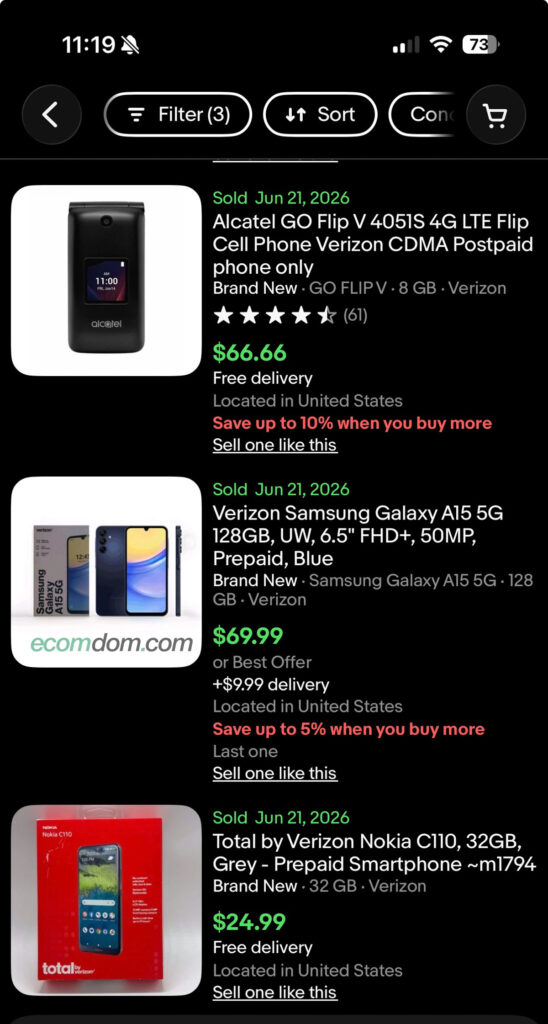
For carrier brands, the ones that have treated me best are AT&T, Verizon Prepaid, TracFone, Cricket, and Boost Mobile. Those move like clockwork.
Every single one of these is locked to its carrier, which brings me to the one thing you have to understand before you flip a single prepaid phone.
The carrier-lock thing (read this part twice)
Almost every prepaid phone on that clearance rack is locked to a carrier, meaning it only works with that carrier’s SIM card. An unlocked phone takes a SIM from anybody, which is why unlocked phones are worth more and why buyers get weirdly intense about the difference.
I sell mine locked, and that’s perfectly fine. The trick is to be loud about it. I put “locked to carrier” right in the description, and honestly you should put it in the title too. Here’s the trap: if you build your listing with eBay’s “Sell one like this” feature and the seller before you didn’t mention the lock in their title, you inherit their title and quietly forget to add it. Next thing you know your inbox is a parade of people asking “is this unlocked? is this unlocked? is this unlocked?” Say it once, up front, in the title, and you’ll save yourself a hundred of those messages. A buyer who knows what they’re getting doesn’t file returns or torch your feedback over it.
How I comp a phone while standing in the aisle
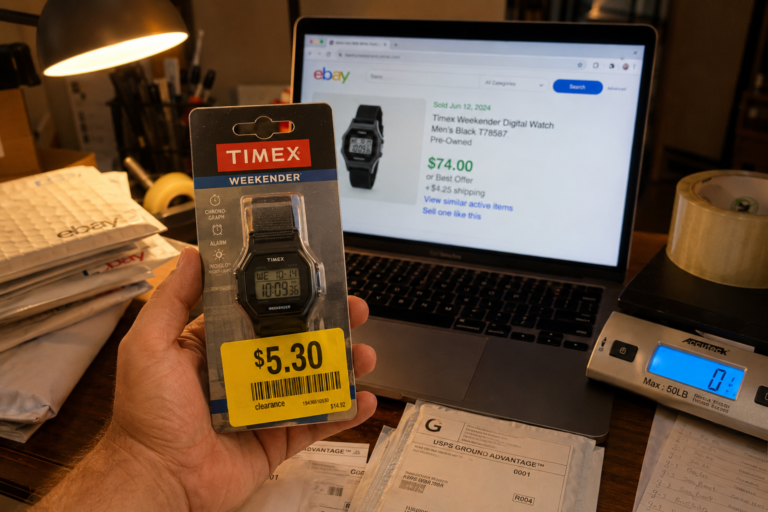
Same rule as everything else I buy: check the eBay sold listings before I commit a dime. The annoying part with phones is that they’re usually locked inside the glass case, so you can’t just grab the box and scan the barcode like a normal product.
So I’ve got a little system. If I can get to the UPC, I scan it straight into eBay, because that pulls up exact matches fastest. When the box is trapped behind glass, I fall back to typing the phone’s name into eBay search, or I use eBay’s camera feature to snap a photo and let it find lookalikes. One of those three almost always gets me a real read on what the phone sells for, so I know whether that clearance price is actually a deal or just a smaller rip-off.
What I avoid like the plague: Walmart-brand carrier phones
This is the big one, so let me be blunt: I don’t touch Walmart’s own carrier phones.
I’ve sold maybe a handful, and it was miserable enough that I swore them off. A couple got returned, the rest just sat there gathering digital dust and never sold. In my opinion they’re more trouble than they’re worth. The only theoretical exception is something like an iPhone on a Walmart carrier, and even then I’m probably walking right past it. The demand just isn’t there next to the real carrier brands.
If you’re new, take this as a lesson I already paid for so you don’t have to: leave the Walmart house-brand phones on the shelf and go for the AT&T, Verizon, Cricket, Boost, and TracFone stuff instead.
The time a buyer swapped parts on me and I caught it at the Apple Store
Remember when I said someone robbed me and I didn’t realize it until I was standing in an Apple Store? Here’s that story, because it cost me money and it’s the kind of scam nobody warns you about when you’re starting out.
Early in my reselling days, I sold an older iPhone. Couple weeks go by, and the buyer opens a return saying it doesn’t work, complete with photos. I was green, so I didn’t think twice. eBay deemed it defective, which meant I had to take it back, refund him in full, and cover the return shipping out of my own pocket too.
Phone comes back, and I cannot get this thing to turn on for the life of me. I try everything. Hard resets, different cables and chargers, calling Apple support, digging through forum threads at midnight like an old-school millennial troubleshooting his own problems. Nothing. Eventually I haul it to the Apple Store, figuring I’ll let the pros work their magic and maybe lean on a manufacturer warranty. The Apple guy informs me the warranty expired three years ago because it’s an older model, and then, the kicker: poking around, it sure looked like the buyer had cracked the phone open and swapped some parts out before mailing it back to me. Basically he kept the good guts and sent me back a hollowed-out shell.
And of course, because I was new and trusting, I’d already left him glowing positive feedback. So I had zero leverage. I reported the buyer, but it was months after the sale at that point, so I’m guessing absolutely nothing happened to him. Lesson permanently learned.
Two things I took from it: don’t hand out buyer feedback the second a sale closes, and don’t assume every “defective” return is on the level. The vast majority of buyers are good people, but part-swapping is a real move, especially with phones. It doesn’t happen often, but it happens, and now I actually inspect returns before I close them out instead of taking everyone at their word.
Don’t sleep on Bluetooth speakers
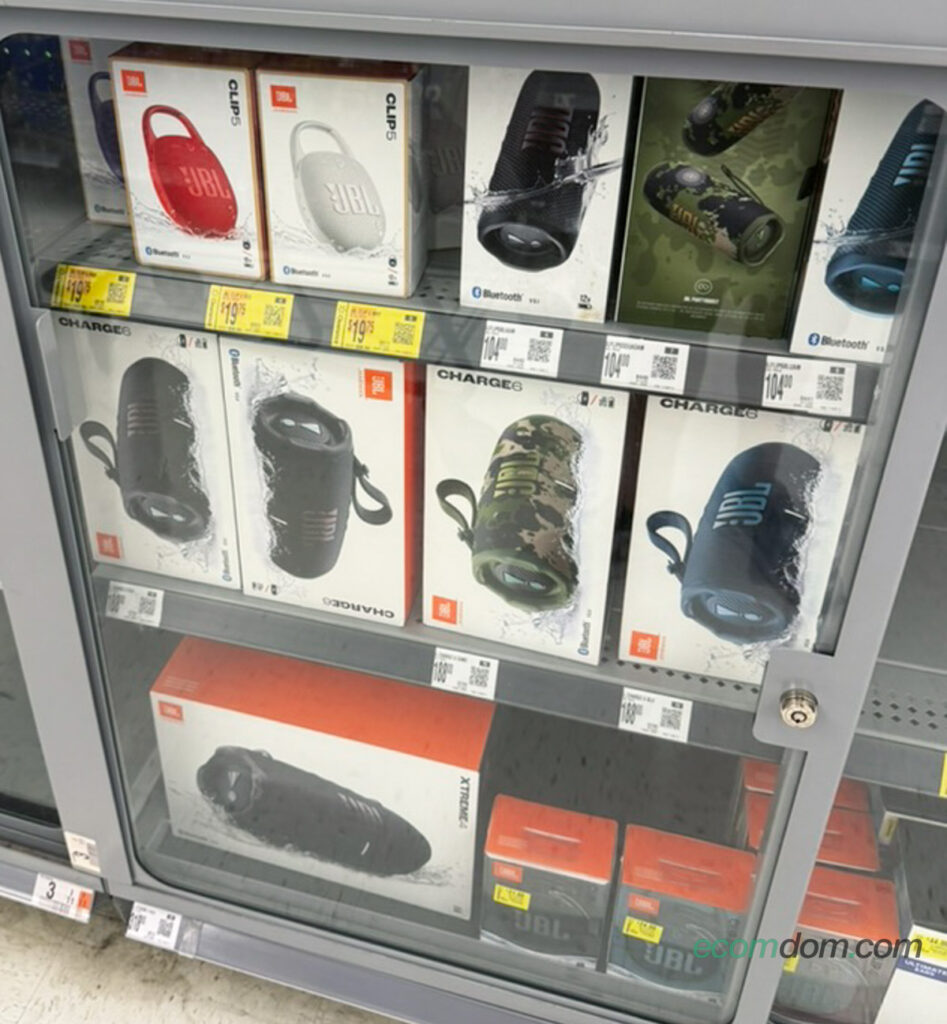
Phones are my steady volume, but my summer love is flipping JBL speakers. They’re perfect beach and camping speakers, so demand spikes the second the weather warms up.
Every now and then you’ll hit one Walmart with JBLs at like 70% off while the Walmart three minutes down the road still has the exact same speaker at full price. That right there is the entire game. Bluetooth speakers are easy flips, and the ROI usually beats phones, so when I find a genuinely marked-down JBL, it’s coming home with me.
The takeaway
Flipping clearance phones isn’t about one heroic score. It’s about knowing what sells (iPhones and Samsungs, real carrier brands), being honest about the lock, dodging the stuff that bites you (I’m looking at you, Walmart-brand phones), and treating each $15 flip as one more piece of feedback and one more handful of cash to put back to work.
Do enough of them and you’ve quietly built something real, one clearance sticker at a time.