What is Reselling, According to Someone Who Actually Does It
The first flip I ever ran was candy, and I was in middle school.
Here’s the setup. The ice cream man came through the neighborhood, and every kid on the block would empty their pockets the second they heard that music. Rap Snacks, ice cream, drinks, whatever he had. The problem was he didn’t come around enough. Half the time nobody knew if he was showing up at all, or if he’d skip the block entirely.
So you had this weird situation. There was demand, kids with money burning a hole in their pockets and a real craving for snacks, but there was no reliable supply. The demand was constant. The supply showed up whenever it felt like it. That gap between what people wanted and what they could actually get is the whole thing. I didn’t have the vocabulary for it in seventh grade, but I was looking at a supply problem, and supply problems are opportunities if you’re the one who solves them.
My brother and I figured we could. We went to BJs, bought candy in bulk, and started selling it around the neighborhood at a price that was fair to the kids and still left us room. We weren’t undercutting the ice cream man on price so much as beating him on availability. We were always there. He wasn’t.
The numbers were simple, which is part of why they stuck with me. A 24-pack of Snickers ran about $18, so our cost was roughly 75 cents a bar. We sold them for $2. That’s a little over a dollar of margin on every bar, and once we cleared a full box we were looking at around $30 in profit. Better yet, we could move a whole box in a couple of weeks without really trying, because the demand was already sitting there waiting. That’s the part that hooked me: we didn’t have to create the want. We just had to show up with the product.
I was hooked. Something about turning $18 into $48 just by being the guy who showed up made a lot of sense to my twelve-year-old brain, and it never really stopped making sense.
So what is reselling, really
Reselling is buying goods at one price and selling them at a higher one. That’s the whole definition. You’re the middleman between where a product is cheap and where a buyer is willing to pay more, and you keep the difference. That difference has a name, it’s your margin, and protecting it is basically the entire job.
The catch, the thing that separates this from a get-rich thumbnail, is that an item is only worth what someone will actually pay for it. The market sets the price, not you. You can list a thing for whatever you want, but the sale happens at the number a real buyer agrees to. That means you can’t fix a bad buy by pricing your way out of it. If you paid too much going in, the market doesn’t care.
So the real skill here isn’t selling. It’s sourcing, which is just a fancy word for buying well. You have to find goods at a steep enough discount that there’s still room left over after the market takes its cut and after all your costs come out. Get the buy right and the sale mostly takes care of itself. Get the buy wrong and no amount of nice photos saves you.
The good news is those discounts are genuinely everywhere. Clearance racks, seasonal markdowns, stores that price the exact same item differently a few miles apart. The margin is sitting out there in the world waiting for someone to notice it. You just have to do the research and go find it. That legwork is the job, and it’s also the reason most people quit.
The types, from the ones I actually do
There are a few flavors of reselling, and I’ll walk through the ones I’ve put real reps into.
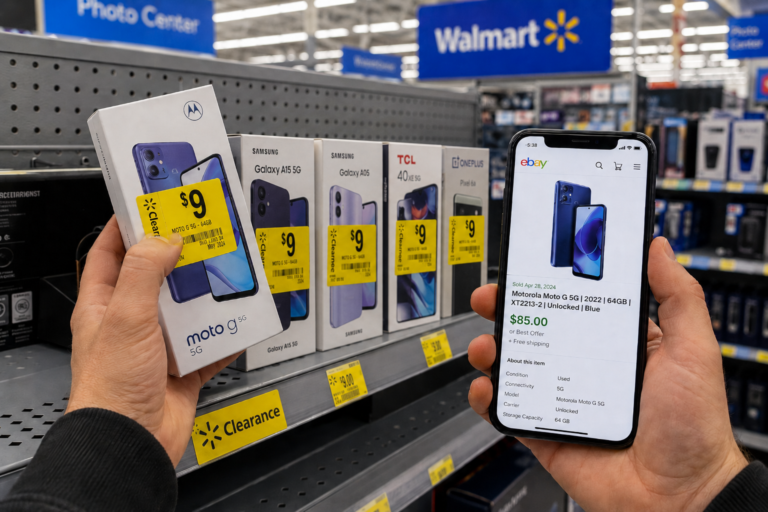
Retail arbitrage. Arbitrage is just a ten-dollar word for buying something in one place and selling it in another where it’s worth more. Retail arbitrage means the place you’re buying is a regular store, and you’re taking advantage of clearance or discounts to flip that product somewhere else for a profit. It’s my favorite lane and hands down the easiest way to get into this.
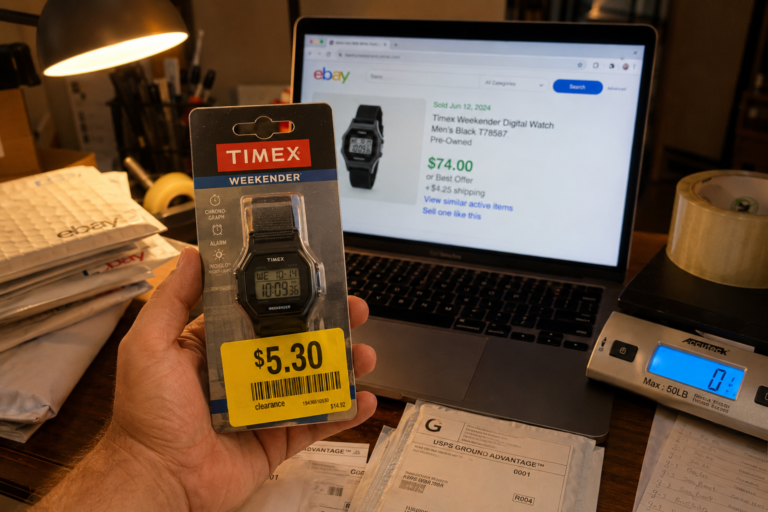
Walmart is the best starting point, and it doesn’t matter whether you’re selling on eBay, Amazon, or Facebook Marketplace (shady-ass Craigslist). Walmart runs clearance constantly, and here’s the part that makes it work: one Walmart might have an item marked way down while the Walmart down the road still has it at full price. There’s no national clearance price, it’s store by store, so it’s genuinely YMMV. That inconsistency is the opportunity. You find the discounted item, check whether there’s actual demand for it (a market), and confirm the going rate is high enough to clear your buy price plus fees. If the numbers work, you buy. If they don’t, you walk. Once you get comfortable reading those numbers on the spot, you branch out to other big box stores, Target, Home Depot and its penny deals (those are real, just hard to find, and worth their own post later).
Used goods flipping. This is the eBay side for me. Instead of new clearance product, you’re moving secondhand items to buyers who want them. Same core idea, different sourcing.
Dropshipping. People lump this in with reselling and it technically is, but I don’t really count it the same way. You never touch the product. You market it, the supplier ships it, you keep the spread. It’s a different game than driving to three Walmarts and packing boxes at your kitchen table, so I’ll leave it there.
Is reselling even legal
Yes, and it’s worth understanding why, because the logic is pretty simple.
Walk into Walmart and buy an iPhone case for $19.95. Not bad, right? Except Walmart almost certainly paid their supplier a couple of bucks for that same case. Their cost of goods was tiny and the markup on it is enormous. That’s not a scam, that’s just retail. Everybody in the chain, the manufacturer, the distributor, the store, buys low and sells higher, and every one of them adds a markup on the way to you. So what exactly stops me from being one more link in that chain?
Nothing, and I’m not ripping anyone off to do it. I’m researching products and prices, spending my own time and gas driving to locations to track down discounted stock, and offering those goods to buyers at close to market rate, which is almost always cheaper than the big box store charges. That’s a product and a service at a better price than corporate America. The legal principle underneath all of this is that once you buy something, it’s yours to resell. You’re not claiming you made it or that it’s brand new from the factory, you’re just selling a thing you legitimately own. Frame it that way and the “is this allowed” question mostly answers itself.
The one caveat is that certain brands and platforms have their own restrictions on what you can list, so it pays to know the rules of wherever you’re selling before you buy a pile of something.
What it actually costs (the part nobody puts in the thumbnail)
Here’s where “bought for X, sold for Y” falls apart, and where most beginners get burned. The gap between your gross (what the item sold for) and your net (what you actually keep) is bigger than it looks, and it’s built out of a bunch of small costs that don’t show up on the price tag.
Start with platform fees. eBay takes roughly 13.5% on most sales, and that comes off the top of everything, including the shipping the buyer paid. So the second a sale closes, you’re already handing back a chunk. You can dodge that fee on Facebook Marketplace, which charges nothing, but the tradeoff is you’re meeting a stranger in a parking lot to haggle over $40. I’d rather not spend my afternoon negotiating with lowballers and shiesters in public. I’ll happily pay the fee for the convenience of packing an item, slapping a label on it, and moving on to the next sale with almost zero human contact. Time is a cost too, and standing in a lot arguing over five bucks is an expensive way to save on fees.
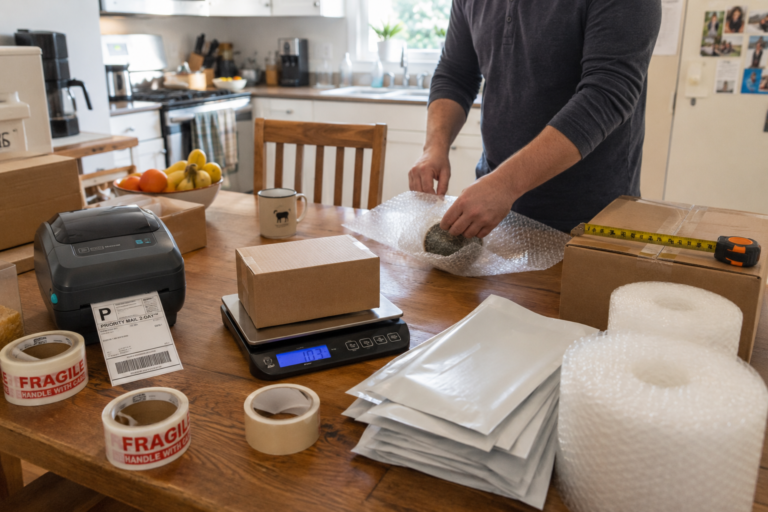
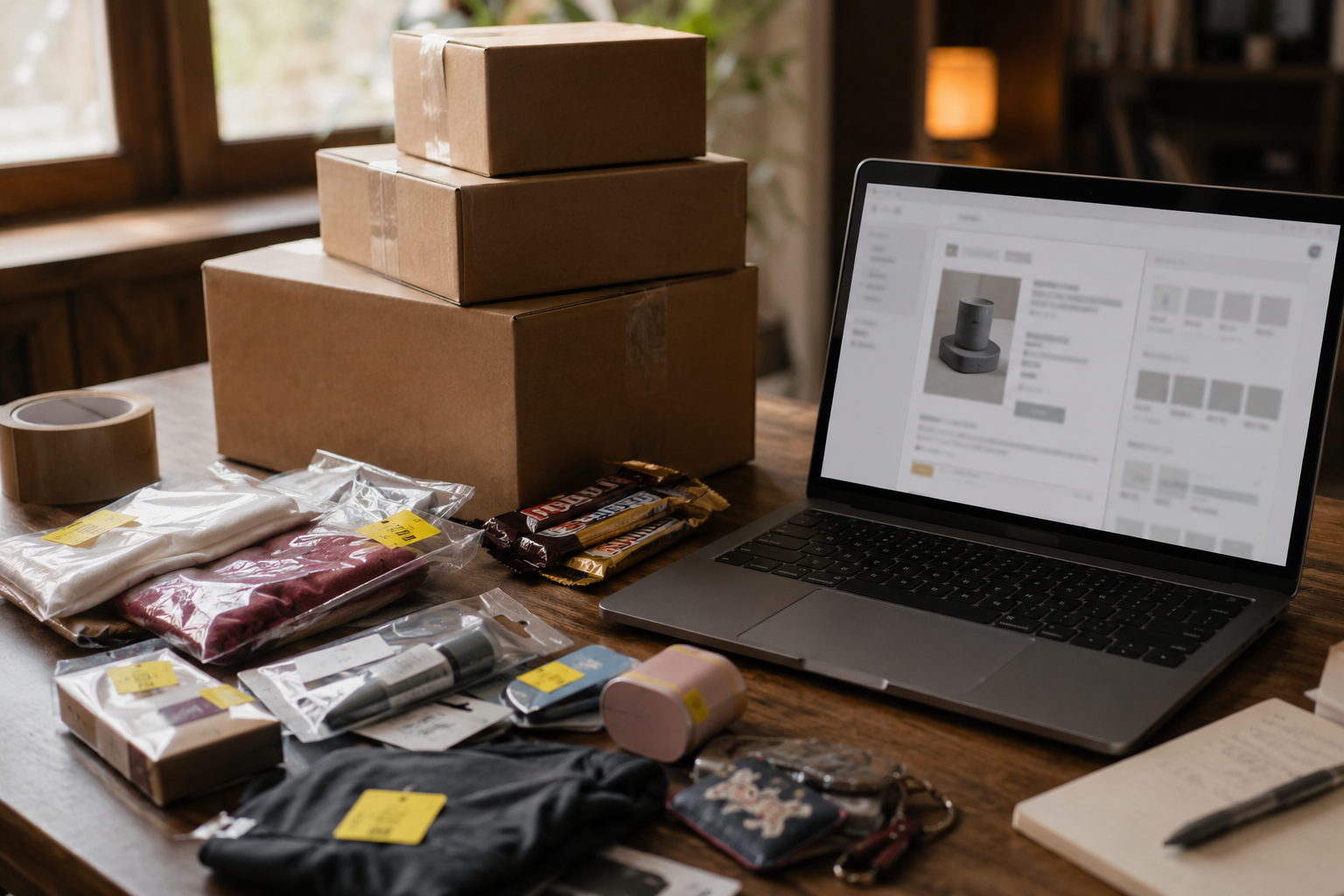
Then there’s the stuff nobody warns you about. Shipping supplies and setup are a real cost. Boxes, tape, box stuffing, all of it adds up, so source it cheap. And at the end of the year, Uncle Sam has his hand out. Track everything, every mile, every box, every fee, so you can write off as much as you legally can. The resellers who don’t track it end up paying for the privilege of being disorganized.
(This is exactly why I built a free eBay reseller template to keep your listings and numbers straight from day one. Grab it if you’re starting out.)
Now go back to that $30 candy profit from middle school. That was our gross, the number that made me feel like a tiny tycoon at twelve. But once you factor in the ride to BJs, the split with my brother, the hours we spent actually walking around the neighborhood moving product, and the fees and shipping costs I’d absolutely be paying if I ran that same operation on eBay today, the real net gets a lot thinner. It was still worth it, and it still taught me everything. But the number on the receipt is never the number that lands in your pocket, and understanding that gap between gross and net is the single most important thing to get straight before you start.
Who reselling is actually for
I’m not going to tell you anybody can do this. Reselling works for people who have some drive to hustle. If the idea of driving 20 minutes to a Walmart for good deals sounds like too much, this isn’t your thing, and that’s fine. There are plenty of side hustles you can run from your couch, and I’ve written about a few of those.
But if you’ve got that itch to be your own boss one day and make money flipping stuff, reselling cracks the door open. It gets your brain working on how to monetize more of what you’re already doing. Content, for one. Which is exactly what I’m doing right now. I flip stuff, and then I write about flipping stuff.
That’s really the honest pitch. It won’t buy anyone a lambo. But that candy operation in middle school taught me the one thing I still use on every clearance run and every eBay listing today: find the gap between what something costs and what someone will pay, do the unglamorous work in the middle, and the rest is just reps.