I Delivered 5,000 Packages With Amazon Flex (Here’s How to Actually Maximize Your $/Hour)
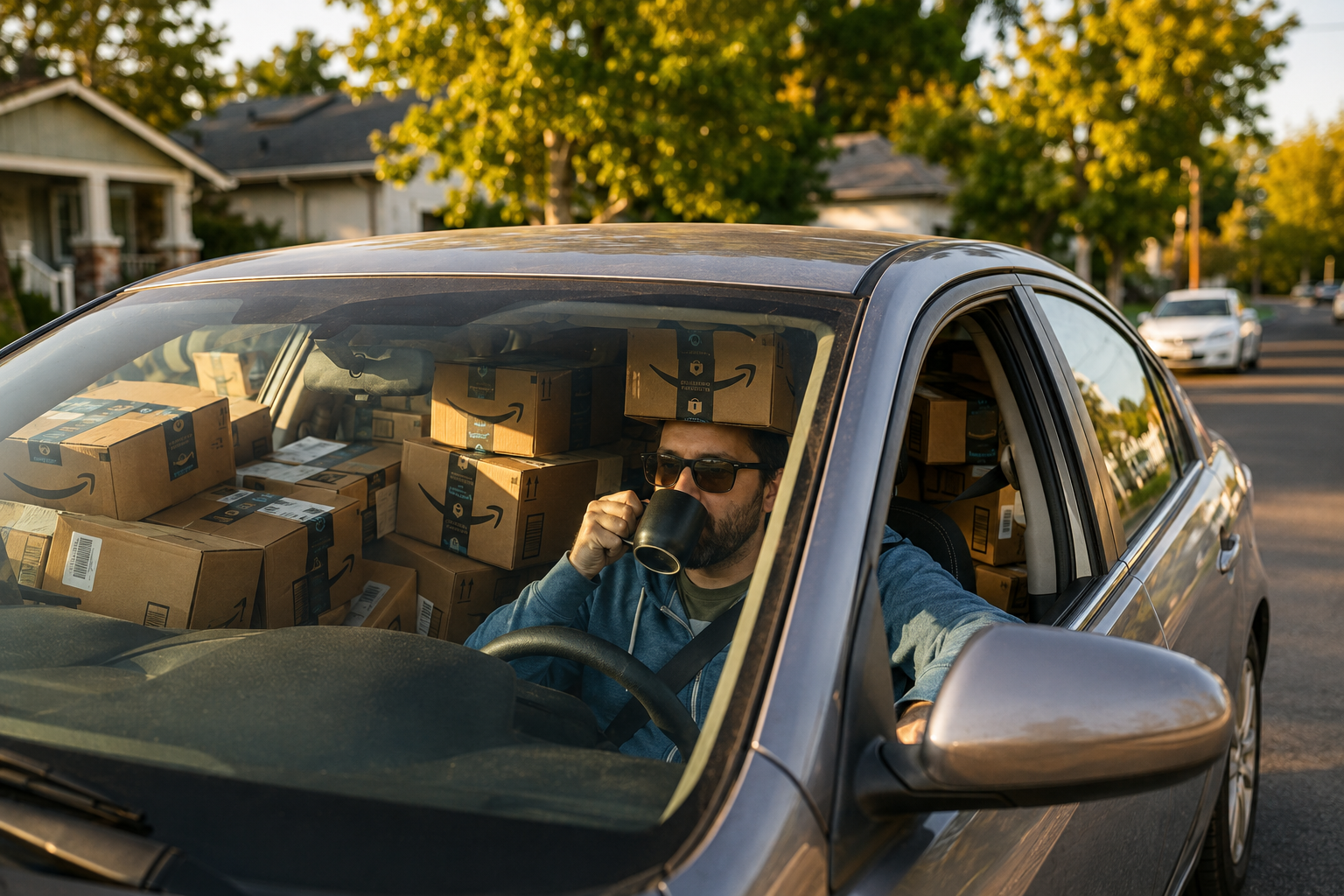
Three years. Roughly 5,000 packages. South Jersey, about 25 minutes from Philly, close enough to the Shore that “long distance bonus” sometimes means a packed boardwalk in July instead of a quiet cul-de-sac.
Amazon Flex isn’t a get-rich scheme, nobody’s buying a boat off this. But it’s been one of the more consistent side hustles in my stack, and consistent is underrated. I’m not here to sell you on it. I’m here to tell you what I wish someone told me before my very first block, because that block still lives in my head rent-free.
The Block That Should’ve Been a Warning Label
My first ever Amazon Flex route. 8pm to 10pm. $48.
I took it because I was brand new and just excited to make some money on my first block. $48 sounded fine. What I didn’t know yet: that exact station, that exact time slot, regularly pays $70 for the same 2 hours. Mistake number one, and one I’d repeat a few more times before I learned to wait.
Mistake number two is the one that actually hurt. I showed up, and instead of getting a real route, the warehouse manager pieced one together on the fly. Bag here, bag there, whatever was left over. I ended up with deliveries in New Jersey, Pennsylvania, and Delaware. On a single 2 hour block.
A clean 2 hour block should run you about 1.25 to 1.5 hours door to door, home included. Mine took 3.5 hours.
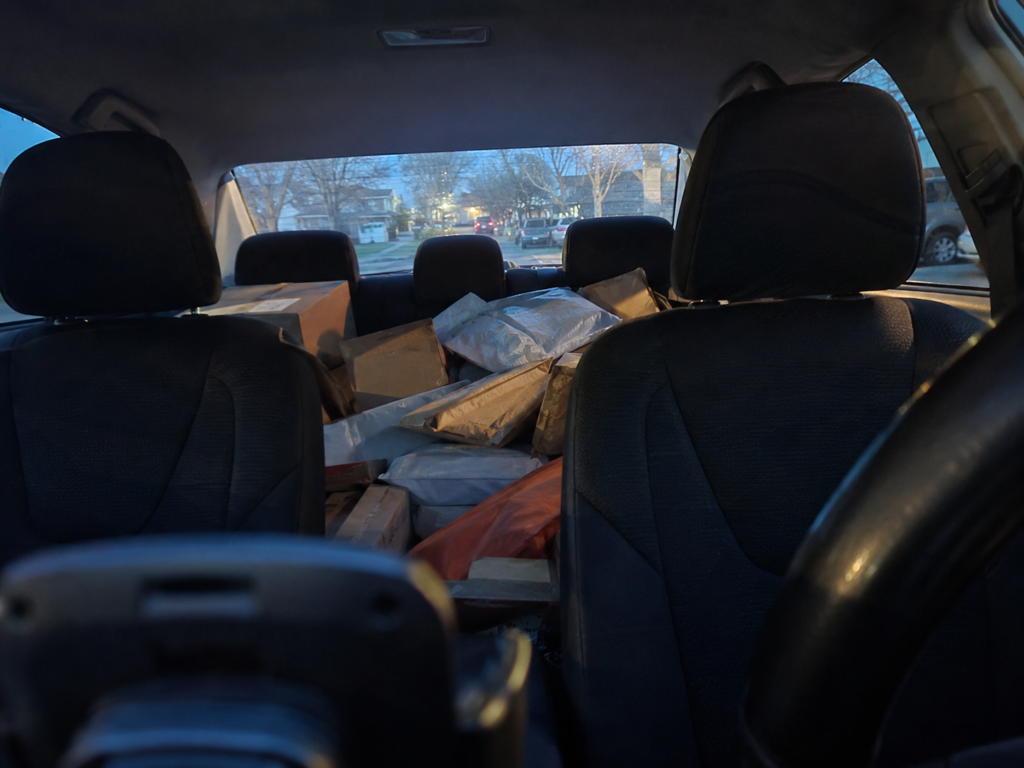
I didn’t know it at the time, but you can question a route like that. Realistically, the manager isn’t going to side with you on the spot, they’re juggling their own metrics and a new driver isn’t exactly leverage. But once you’ve built a reputation at a station, that’s where it pays off. Managers who know you will throw you a bone every now and then, shaving a package or three off your route just because they like having you around. Three years later the whole system is more structured than it used to be, but the lesson holds: don’t just accept the route blindly. Look at it first, and know that your standing at a station is worth more than any single complaint.
The Best Blocks Paid Me to Do Nothing
Not every story is a cautionary tale. A handful of times, the app glitched, or something on Amazon’s backend hiccuped, and a few of us got paid for blocks where we never touched a single package. Showed up, system was confused, got sent home, got paid anyway.
I’m not saying chase this. I’m saying it happens, and when it does, you say thank you, and you go log into Uber Eats or DoorDash for the rest of the night (regular Uber’s never been my cup of tea).
Rapport Is a Real Strategy, Not a Soft Skill
Here’s the one that actually moved the needle for me long term. For a stretch there I was running a 2 hour block almost every night, 5 to 6 nights a week, not even counting day routes (different beast entirely). Showing up that consistently, at the same station, with the same managers, builds something.
Sometimes that meant getting to pick my own block instead of getting assigned one. Sometimes it meant a manager skipping the full block entirely and just having me run out 1 or 2 packages locally instead, the kind of “route” that’s done in 15 minutes flat. That’s not luck, that’s relationship equity. Gig work feels anonymous until you make it not anonymous, and the payoff for a little consistency is real.
Get There Early, Every Time
The culture at any given station is genuinely YMMV. Some warehouses have their act together, some don’t, and honestly that’s shifted a lot over three years as Flex got more structured overall. But one thing stayed true the entire time: get there early.
Early means first pick. The bags are already staged, and you get to choose which route you’re actually feeling that night instead of getting whatever’s left. Some routes are an absolute gift, 30 minutes of driving, home in under 45 total. Others are a slog, 2+ hours including the drive back, sometimes pushing 3.
Amazon will occasionally throw a “long distance” bonus at those longer routes. Is an extra $5 to $7 worth an extra hour of your life? That’s the math you have to do for yourself every single time, and the answer is usually no.
The Real Game: Watching the Drop and Riding the Bump
This is the part that actually answers the question in the title.

Amazon Flex pay isn’t fixed. Routes drop at certain times, and if competition for that route is low, nobody’s grabbing it, the pay bumps up. This happens on a schedule, sort of, if you pay attention long enough to learn the rhythm at your station. Three years in, I still know roughly when blocks drop and roughly when the pay starts climbing if nobody bites.
The skill isn’t grabbing the first thing you see. It’s knowing the ceiling. Every route has a price point where it becomes too good to sit on, and once it hits that number it’s gone in under 30 seconds flat. That means you’re not casually checking the app, you’re refreshing like it’s a concert ticket drop. You learn the cadence, you learn the ceiling, and you strike right before it disappears.
That’s the whole game. Not hustling harder. Watching closer.
Track Your Mileage Like It’s Free Money (Because It Kind Of Is)
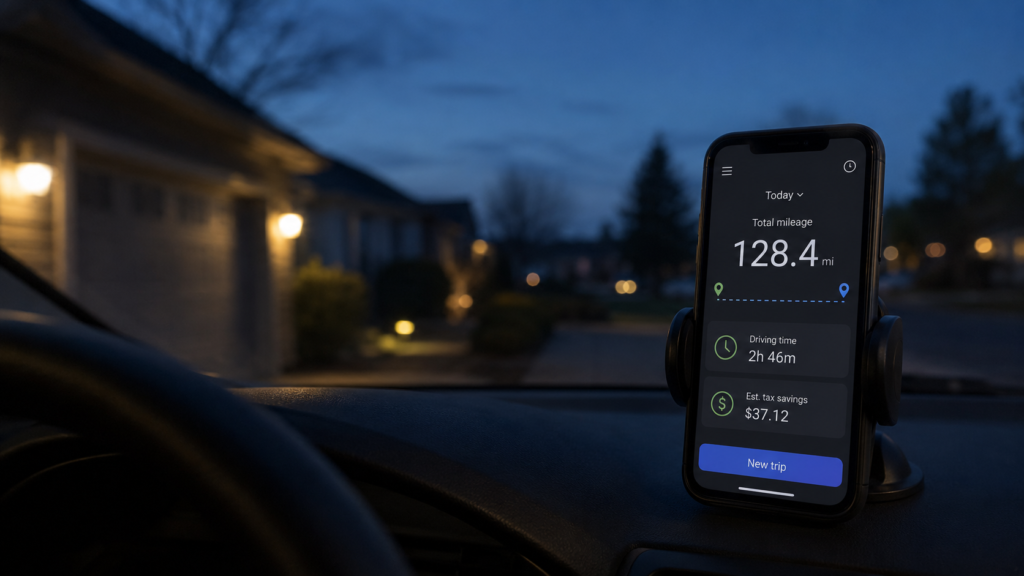
This one isn’t glamorous but it’ll save you real money come tax season. Here’s the part nobody tells you when you sign up: Amazon doesn’t track your mileage for you. The IRS definitely doesn’t track it for you either. Shocking, I know. Nobody is coming to do this for you, so you have to treat this like the small business it actually is.
I use the Stride app to log miles, and I asked my tax accountant the question everyone asks: when do you actually start the clock? Some people say only track from when you pick up your first package. My accountant told me to start tracking the second I leave my driveway and stop the second I’m back home.
That gap matters more than you’d think over 5,000 packages worth of driving. Every mile to the station, every mile back, all of it adds up to a mileage write-off that’s basically sitting there waiting for you to claim it. Open the app before you back out of the driveway, close it when you pull back in, and you’ve got a clean log ready to go when tax season rolls around instead of trying to reconstruct three years of routes from memory.
Payouts Have Never Been the Problem
Whatever else you want to say about Flex, Amazon has never once messed up paying me. Three years, 5,000 packages, zero payout issues. I’ve got mine set to twice a week, every Tuesday and Friday, and it shows up like clockwork. Whatever you think of the gig economy overall, this is one corner of it where the money side just works.
Two Bonus Moves For Squeezing Out More
A couple extra habits I picked up along the way that aren’t strictly Flex tips, but they live in the same lane.
On the longer drives home, the ones eating into your $/hour, I’d flip on Uber Eats and see if anything popped up that was actually on my route. Not a detour, not extra miles, just something that lined up with the path I was already driving. A couple extra bucks of pure schcarole for a drive I was making anyway.
Same logic applies to Walmart clearance flipping. If a route happened to put me near a Walmart I’d normally never have a reason to visit, because it’s out of the way on a normal day, I’d stop in and check the clearance aisles while I was already in the area. You’re not making a special trip, you’re just not wasting the trip you’re already on. Maximize the time you’re already spending, don’t create more of it.
So Is It Worth It?
For me, clearing somewhere in the $20-25/hour range after gas and wear over three years and 5,000 packages, yeah. Not life-changing money. Not a replacement for a real income. But it’s a side hustle that rewards paying attention more than it rewards grinding, and that’s a trade I’ll keep making.
Get there early. Know your route before you accept it. Build actual relationships with the people handing out the work. And learn the rhythm of the drop before you ever touch the app expecting it to hand you anything.
Nobody’s buying a Lambo off Amazon Flex. But three years of reps taught me more about this hustle than any forum post ever did, and that’s the whole point of getting reps instead of just chasing the rich part.