I Bought 22 Clearance Watches at Walmart. One Sold for $74.
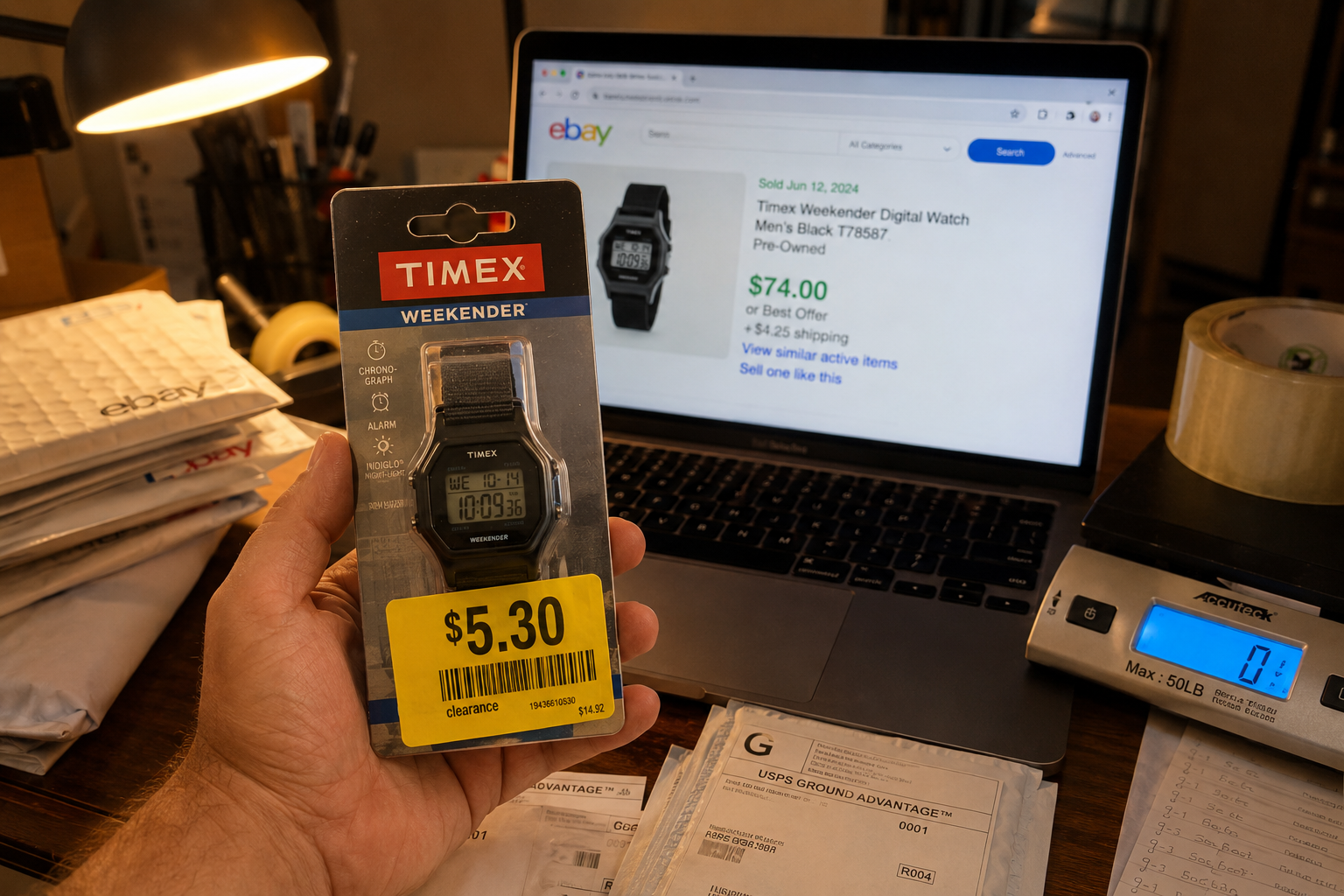
Most people would’ve walked right past them. I bought all 22.
Don’t take that as some confident-seller flex, though. I’ve taken way bigger swings than a bin of clearance watches and lost money on plenty of them. This one just happened to work, and the reason it worked is the same boring stuff I’ll walk you through here, none of which requires you to be some natural-born hustler.
Here’s how it started. I was at Walmart doing my usual clearance-electronics run, and on the way through I passed a case by the jewelry section full of Timex and Casio watches marked down to almost nothing. I’d never sold watches before. But the price was low enough that I figured I’d find out, so I grabbed 22 of them at $5.30 each, tax included. No idea if they’d sell. I just knew that at that price, I’d have to try pretty hard to lose money. That one detour is how watches became part of what I sell now.
One of them, a Timex IRONMAN Endure 30, I sold for $74.35. After eBay took its cut and I paid for shipping, I walked away with about $45 in actual profit. On a watch that cost me five bucks and change.
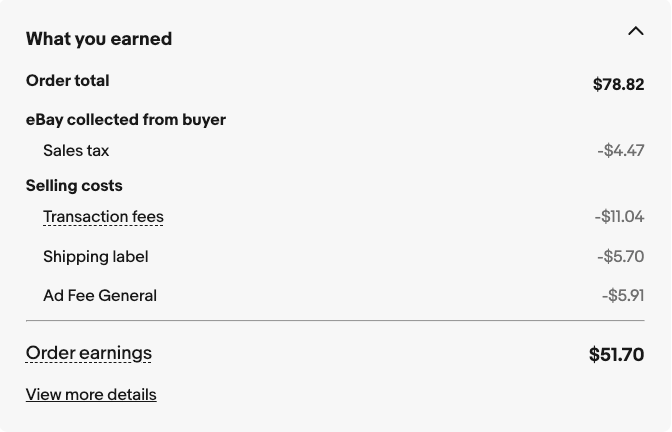
That $74 sale is the easy part to brag about. The number that actually matters is the roughly $45 I kept, and the gap between those two is where most people get burned. So I’m going to walk you through the whole thing the way it happened: how I knew a watch I’d never sold before was worth buying, what the real numbers looked like after fees, and the exact process I used to list it. If you’ve ever wondered whether this reselling stuff actually works, this is the honest version.
Let’s start with the money.
The real math, after fees
Here’s where that $74.35 actually went:
- Sale price: $74.35
- eBay transaction fees (watches run about 15%, higher than most categories): –$11.04
- Promoted Listings ad fee: –$5.91
- Shipping label: –$5.70
- Shipping supplies (box, bubble wrap, tape): –$1.50
- What the watch cost me: –$5.30
- Actual profit: about $44.90 (plus a 2-mile drive to the post office, which I’m not going to pretend is free either)
A couple of things are worth pointing out here. First, the watch fee is around 15%, which is higher than most categories on eBay (a lot of stuff sits closer to 13.6%). Jewelry and watches get the higher rate, so if you’re pricing a watch and you assume the standard fee, your margin will come out lower than you expected.
Second is that $5.91 ad fee. That’s from Promoted Listings, eBay’s pay-to-get-seen feature. Here’s my honest take: I didn’t really need to promote this one, and most of the time I don’t bother. The sold comps already showed steady demand and not much competition, so it likely would’ve sold on its own. I ran the promotion on this particular listing anyway, and it cost me almost six bucks of margin I probably could’ve kept. So treat that line as a lesson more than a recommendation: promoting can help when a category is crowded and you need visibility, but on an item that’s already moving, you’re often just paying to sell something that would’ve sold regardless.
The last thing is timing. I ran this math before I listed the watch, not after the money came in. It takes a couple of minutes to add up the fees, the shipping, the supplies, and what you paid, and then you know your actual profit instead of guessing at it. That’s most of what kept these watches worth doing.
How I knew a $5 watch would sell (this is the actual skill)
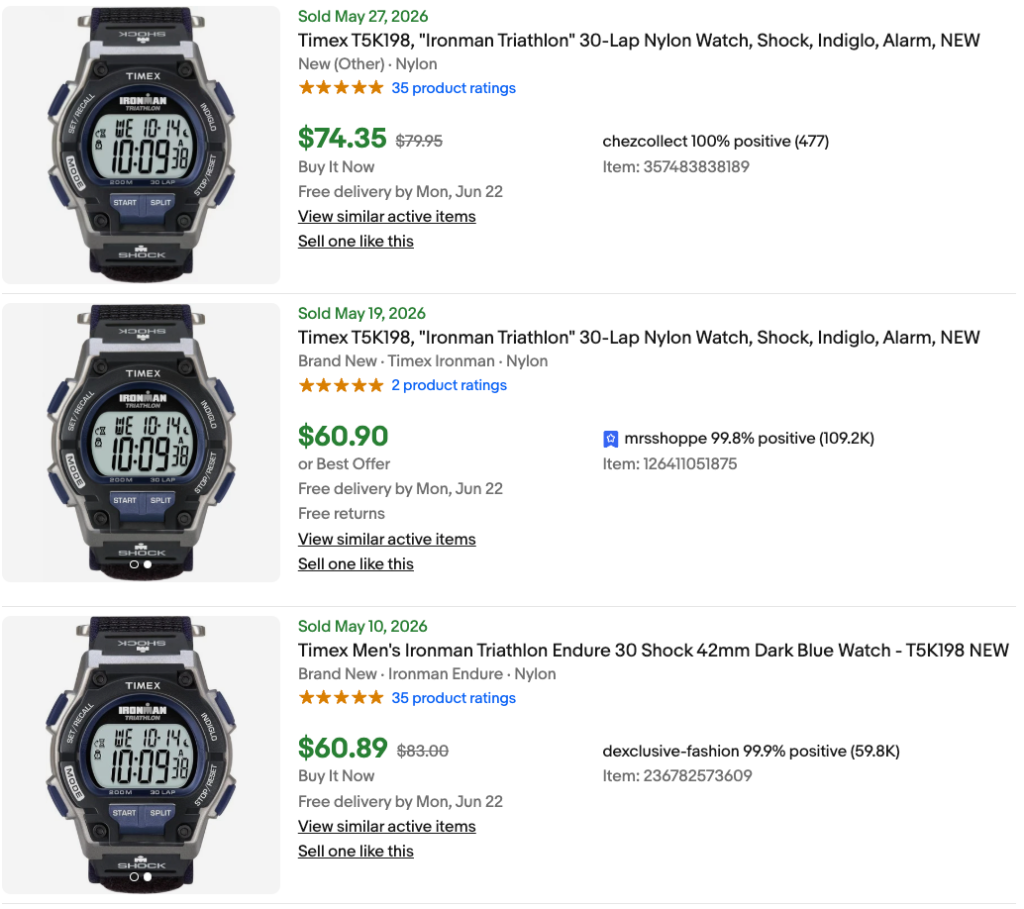
Everyone tells you to “research before you buy,” but almost nobody explains what that actually means in practice. The short version: start with eBay’s sold listings, because they’re the part most beginners skip. Then check the active ones too. Each set answers a different question, and you need both.
Sold listings tell you what’s actually happened: what the item really sold for, and how often. I can list a watch for $500 right now, but that doesn’t mean anyone will pay it or that it’ll ever sell. The sold data is the receipts, the proof that real buyers paid real money. That’s the part that tells you whether something is worth buying in the first place. Active listings then show you the other half of the picture: who you’re competing against right now, how many of them there are, and where today’s prices sit. Put the two together and you’ve got both the demand and the competition in front of you.
For this Timex, the sold comps showed it moving about 2 to 3 a week, and there weren’t many active listings competing for those buyers. That mix of steady demand and thin competition is exactly what you’re hoping to find.
This is where the two sets of data actually changed my decision. The sold comps showed steady demand, and the active listings showed I wouldn’t be walking into a crowd. So I made a choice: instead of undercutting everyone to flip it fast, I priced it on the higher side. I could’ve listed it at $65 and probably moved it in a day, but I didn’t need the money that fast, so I was happy to sit on it a little longer for more profit. I listed it at $74.35 and was still in the top five lowest-priced listings for that exact watch, so there was room to take the margin without scaring off buyers. That’s the real decision every time: price near the floor to move it quick, or aim higher if you can afford to wait.
That’s really the whole point of checking the sold data first. Once I’d seen how often this watch actually sold and for how much, buying it wasn’t much of a gamble anymore. I knew roughly what I could get and how long it might take, which made spending the money easy.
Why I bought 22 instead of 2
This part is less about the watches and more about how I think about risk, which is the thing that actually makes reselling sustainable.
I didn’t know which of the 22 would be the winners. But Walmart has a 30-day return policy, and that changed the entire equation. My plan was dead simple: sell enough watches inside that 30-day window to recoup my whole ~$117 inventory spend. If a handful of the cheaper ones sold early and covered my costs, then everything after that was profit, on a buy where my actual downside was close to zero, because anything that didn’t move, I could just return.
That’s the part I’d want a new reseller to understand. It’s not really about landing one big flip. It’s about setting up the buy so you almost can’t lose, and then letting the good ones run. I sold a few of the cheaper watches early to cover my costs, and everything after that was upside.
Cheap name-brand inventory like this is also great when you’re newer. Small, steady sales build your seller rating and buyer trust faster than waiting around for one big-ticket item, and that early trust matters more than people think.
My actual listing process, top to bottom
Here’s what I actually do once a watch is in hand. The whole thing takes me about 15 minutes a listing once you’ve done it a few times, and it’s the same steps every time.
Real photos first. I shoot the actual watch showing its real condition, including any shelf wear. Buyers trust you a lot more when they can see the exact item they’re buying, and honest photos also protect you from “not as described” headaches later on.
Then the stock images. I also grab Walmart’s clean product shots and add those in. Your real photos build trust, and the stock ones make the listing look polished, so I use both since they’re doing slightly different jobs.
Edit them. I run mine through Adobe Lightroom because I already use it, but you really don’t need to spend money here. A free Canva account does basically the same thing, and eBay’s built-in editor works fine in a pinch. All you’re after is clear, well-cropped photos that show the watch honestly.
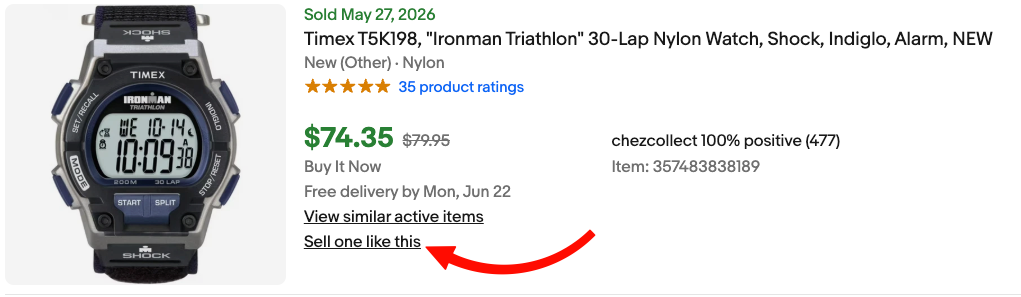
List with “Sell one like this.” This one’s a real time-saver. Don’t start from a blank listing, because you’ll inevitably forget half the item specifics and your listing will rank worse for it. Instead, filter to sold listings, find one for the same item that already has all its specifics filled in, and hit “Sell one like this.” Then you just fill in the extras and double-check the auto-filled ones are right. The more complete your item specifics, the better your visibility in search, and you’re starting from a finished template instead of an empty box.
Description via AI. I copy Walmart’s full description and specs, then have AI turn it into something clean and accurate. I also make sure to mention “free shipping” right in the description, not just in the settings. It takes a minute and reads better than anything I’d type out by hand.
What I actually think about the “rules”
A few things I do differently, or just believe harder than the average eBay post will admit:
Free shipping, every time. I build it into the price. Buyers filter for free shipping, the algorithm tends to favor it, and it takes away one more reason for someone to hesitate before buying.
Buy It Now, not auctions. I’d rather catch the buyer who wants the watch today than make them wait out a 7-day auction. Most people shopping online right now have zero patience (we’re all spoiled by next-day, same-day, sometimes same-hour delivery), so if your listing makes someone wait, they’ll just buy it from the next seller. I set a price the comps support and let it sit there ready to buy.
Filter comps by lowest price, but don’t get fixated on it. It’s worth seeing where the floor is so you know what competitive looks like, but that doesn’t mean you have to be the cheapest listing out there. If the sold data shows real demand and not much competition, you can price for margin and still land in the lowest few. Racing straight to the bottom is a choice, and usually not a great one.
The mistake I made so you don’t have to
When I started out, I built every listing from scratch, filling in the whole blank form by hand. It felt like the thorough way to do it, but it actually worked against me. I’d always miss a few item specifics, and incomplete listings tend to get buried in search and leave buyers with questions you never answered.
The fix took me way too long to figure out: filter to sold listings, open one that already has all its specifics filled in, click “Sell one like this,” and edit from there. You end up with a faster and more complete listing at the same time. If there’s one shortcut to take from this whole post, it’s that one.
If you’re just curious whether this is worth it
Start small, and start with name brands you can actually verify. A $5 clearance watch from a brand people already search for is close to a perfect first flip: low risk, real demand, cheap to ship, and it walks you through the entire process in one cycle: sourcing, comping, shooting, listing, shipping. You learn the whole machine for the price of lunch.
You don’t need a warehouse, a course, or a “mentor” sliding into your DMs. Mostly you need the patience to check sold comps before you buy and to list things properly, and after that it really does come down to repetition. The more listings you do, the faster and better you get.
A lot of online business advice makes this stuff sound more complicated than it is, partly because complicated is easier to sell. In reality it’s pretty approachable. It’s mostly real work and a bit of patience, and the small edges (like checking sold comps) add up over time.
FAQ
How many photos should I use? As many as it takes to cover all the angles. If you show every side, the clasp, the back, the screen, and any flaws, you stop buyers from messaging you asking for more pictures, which saves you time and keeps them from clicking away to think about it. I use my own real photos for the honest look and add the stock images for the polished one.
Auction or Buy It Now? Buy It Now, almost always. I want to capture the buyer who wants the thing right now, not make them wait out a 7-day auction. Think about how you shop today: we’re all used to Amazon delivering in a few hours, so patience is basically gone. I hate bidding as a buyer myself. If I want something, I want it now, and if a listing makes me wait, I’ll just go buy it from someone else. Your buyers are the same way, so don’t give them a reason to click off to another listing.
How do I actually price something? Look at both sold and active listings. Sold listings tell you what the item really sells for and how often, and active listings show you who you’re competing with right now and where the current floor sits. Read the two together, then decide how fast you want to move it. If you want a quick sale, price near the floor. If you can afford to sit on it for a while, you can aim higher and capture more profit while you wait for the right buyer.